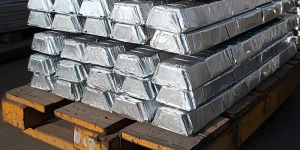
Pure aluminum has a thermal conductivity of about 235–237 W/m·K near room temperature. That equals roughly 136–137 Btu/(h·ft·°F).
The widely cited 237 W/m·K value applies to pure aluminum. Most engineered parts use alloys with lower conductivity. For example, 6061-T6 is commonly listed near 167 W/m·K at 20 °C.
The correct design value depends on alloy, temper, temperature, and product form.
Thermal Conductivity of Aluminum by Alloy
The table gives representative room-temperature values. These are reference values, not guaranteed material limits.
| Aluminum material | Temper or condition | Thermal conductivity, W/m·K | Btu/(h·ft·°F) | Practical reading |
|---|---|---|---|---|
| Pure aluminum | Near room temperature | 235–237 | 135.8–136.9 | Highest reference value in this table |
| 1100 | Representative NIST fit at 293 K | ≈212 | ≈122.5 | High-purity commercial grade |
| 3003 | O | 193 | 111.5 | Good conductivity and formability |
| 5052 | O | 138 | 79.7 | Corrosion-resistant sheet alloy |
| 6061 | T6/T651 | 167 | 96.5 | Common structural and machined alloy |
| 6063 | T6 | ≈200 | ≈115.6 | Common extruded heat-sink alloy |
| 7075 | T6 | 130 | 75.1 | High strength, lower conductivity |
Read the table with these source limits:
- The 1100 result is calculated from a legacy NIST curve fit. Its equation covers 4–300 K.
- NIST marks both alloy pages as legacy and no longer maintained. It reports 2% curve-fit error for 1100 and 0.5% for 6061-T6.
- Those percentages describe each equation’s fit to its source data. They are not material-variability ranges or design tolerances.
Use the table for comparison and early calculations. Use supplier-certified material test data for final release.

Why Published Aluminum Values Differ
Pure aluminum conducts heat mainly through mobile electrons. Alloying atoms disturb the crystal lattice and scatter those electrons.
The effect depends on each element and its state. Dissolved alloying atoms usually reduce conductivity more than precipitated atoms. Heat treatment can therefore change conductivity without changing the alloy designation.
Temper matters for the same reason. Kaiser’s 6061 data list 180 W/m·K in O temper. They list 167 W/m·K in T6/T651. Strength and conductivity often involve a tradeoff.
Valid sources can still disagree. The NIST 6061-T6 equation gives about 154 W/m·K at 293 K. Kaiser lists 167 W/m·K at 20 °C.
That difference may reflect datasets, stock forms, or test assumptions. Treat 154 and 167 as source-comparison cases. They are not uncertainty bounds.
Use them only for preliminary sensitivity when form-matched data are unavailable. Certified project data should define design bounds.
Temperature response is grade-dependent. The NIST 6061-T6 fit changes substantially between 77 and 293 K. It rises from about 84 to 154 W/m·K.


The NIST 1100 fit moves the other way. It falls from about 290 W/m·K to 212 W/m·K across the same interval.
These are cryogenic-to-room-temperature datasets. They cannot predict behavior above room temperature.
A 2025 critical review summarizes grade-dependent curves at higher temperatures. Use a temperature-dependent dataset for the exact alloy and condition.
Thermal Conductivity vs Specific Heat and Diffusivity
These properties answer different thermal questions.
| Property | Symbol and unit | What it describes |
|---|---|---|
| Thermal conductivity | k, W/(m·K) |
Heat flow under a temperature gradient |
| Specific heat | cp, J/(kg·K) |
Energy needed to change material temperature |
| Thermal diffusivity | α, m²/s |
Speed of temperature-field response |
Thermal diffusivity combines all three material terms: α = k/(ρcp). High conductivity does not automatically mean high heat capacity.
Use the specific heat capacity of aluminum when calculating stored energy or transient heating. Use conductivity for steady heat flow through a known geometry.
How to Calculate Heat Flow Through Aluminum
For one-dimensional steady conduction, Fourier’s law is:
Q = k × A × ΔT / L
The equivalent conduction resistance is:
Rcond = L / (k × A)
| Symbol | Meaning | SI unit |
|---|---|---|
Q |
Heat-transfer rate | W |
k |
Thermal conductivity | W/(m·K) |
A |
Area normal to heat flow | m² |
ΔT |
Temperature difference | K |
L |
Heat-flow length | m |
The MIT heat-transfer notes provide the same slab relationship.
Consider a 6061-T6 plate with a 25 × 25 mm heat-source area. The plate is 5 mm thick and carries 20 W.
Using k = 167 W/(m·K):
Rcond = 0.005/(167 × 0.000625) = 0.0479 K/W
ΔT = 20 × 0.0479 = 0.96 K
The ideal bulk temperature drop is therefore about 0.96 K. Pure aluminum would give about 0.68 K in the same geometry.

The estimate excludes spreading resistance, interfaces, convection, radiation, and nonuniform heating. Those terms can exceed the bulk plate resistance.
Aluminum vs Copper for Heat Transfer
Copper has about 400 W/m·K conductivity at 295 K. Aluminum is much lighter.
| Constraint | Copper | Aluminum |
|---|---|---|
| Equal thickness and area | Lower conduction resistance | Higher conduction resistance |
| Equal mass | Smaller available volume | About 3.3 times the volume |
| Common manufacturing advantage | Strong heat spreading | Low mass and easy extrusion |
The NIST reference table lists 8.96 g/cm³ for copper and 2.70 g/cm³ for aluminum. At equal geometry, copper moves heat through the solid more effectively.
Equal mass changes the design space. Aluminum can provide more volume, surface area, or fin length. The final result depends on geometry, airflow, interfaces, and manufacturing limits.
This is why many heat sinks use aluminum fins with a copper base or heat pipe. The design assigns each metal a suitable job.
For cost comparisons, compare delivered assemblies at equal thermal performance. Include metal mass, stock form, processing, joining, finishing, and logistics.
Avoid a fixed raw-metal price ratio. If copper carries a quote premium, quantify the temperature, envelope, or mass benefit it buys.

Which Aluminum Alloys Fit Common Thermal Parts?
Use this table as a shortlist. However, before the project goes into full-scale production, it must first undergo simulation verification and prototype testing.
| Thermal part | Starting point | Verify before selection |
|---|---|---|
| Extruded air-cooled heat sink | 6063-T5 or T6 | Fin geometry, strength, temper, and finish |
| Machined cold plate, base, or housing | 6061-T6 | Channel design, sealing, joining, and stock-form data |
| Formed radiator or heat exchanger | 3003 in the required temper | Forming, brazing, corrosion, and clad system |
| Corrosive formed enclosure or exchanger | 5052 in the required temper | Lower conductivity, wall thickness, and joining route |
| Strength-led thermal structure | 7075-T6 | Whether strength justifies lower conductivity |
| High-conductivity spreader | 1100 or high-purity aluminum | Strength, joining, and fabrication limits |
Hydro’s 6063 data identify heat sinks as a typical application. Its guidance also connects 3003 and 3103 with heat exchangers and HVACR components.
Final selection still depends on the drawing, load, environment, process, and certified stock properties.


What Changes Thermal Performance in a Real Part?
Alloy and temper
Conductivity falls as solute atoms and defects scatter electrons. Aging can change the solute and precipitate balance. The site’s T5 and T6 guide explains those temper paths.
Product form and processing
Plate, extrusion, forging, and casting can have different microstructures. Casting porosity also interrupts heat paths. Use data that matches the supplied stock whenever possible.
Geometry and interfaces
Thickness, contact area, flatness, and thermal-interface material affect resistance. Fin area and airflow control heat transfer to the surrounding fluid. Bulk conductivity is only one term.
Anodizing and coatings
Anodic oxide conducts less heat than the aluminum substrate. A coated mating face can therefore add contact resistance.
The exposed surface can behave differently. Anodizing can raise emissivity and improve radiative heat transfer. Its benefit is more relevant when radiation forms a meaningful share of cooling.
A study of naturally cooled heat sinks found that the result depends on operating conditions. Specify coating type, thickness, and contact masking in the thermal model. For finish terminology, see the Type I, II, and III anodizing guide.

How to Choose a Value for Simulation or Design
- Identify the exact alloy and temper.
- Match the value to operating temperature.
- Confirm product form and material direction.
- Prefer government data, standards, or producer datasheets.
- Check whether the value was measured or calculated.
- Run low, nominal, and high sensitivity cases.
- Validate critical assemblies under realistic boundary conditions.
ASTM E1461-13(2022) covers flash measurement of thermal diffusivity. Conductivity may then be derived using density and heat capacity. The method and inputs belong with the reported value.
Key Takeaway
Start with 235–237 W/m·K only for pure aluminum near room temperature. Use form-matched, condition-matched data for commercial parts.
Then model geometry, interfaces, airflow, and surface condition separately. Confirm those terms before changing alloys.