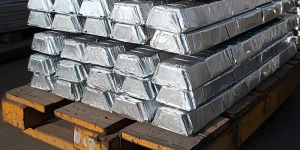
Aluminum is widely used across various industries due to its excellent formability and mechanical properties. Aluminum extrusion stands as the most common and practical method for shaping aluminum today.
Zheng Ji is a professional aluminum extrusion manufacturer from China with over 20 years of experience. We continuously optimize our aluminum extrusion processes. Read on to learn essential knowledge about aluminum extrusion as we will introduce this modern manufacturing technique through our expertise.
What is aluminum extrusion?
Aluminum extrusion is a manufacturing process that produces metal products with a fixed cross-sectional profile by forcing molten material through a die with the desired cross-section at high temperatures. Aluminum products manufactured through this process are called extruded aluminum profiles.
This process resembles squeezing toothpaste: the raw material acts like toothpaste in a tube, while the die functions as the tube’s opening.

The die’s opening cross-section can be customized to specifications, enabling aluminum extrusion to produce profiles with diverse cross-sectional shapes. Due to its high efficiency, repeatability, and versatility, aluminum extrusion technology is widely adopted in industries such as construction, aerospace, and automotive.
What shapes can be extruded?
The aluminum extrusion process can produce extruded aluminum profiles with various cross-sectional shapes. Within the aluminum extrusion industry, profile cross-sections are primarily categorized into the following four types:
- Solid shapes: The simplest extruded shapes include solid sections such as round bars, square bars, rectangular bars, beam and angles.
- Tubular shapes: Tubes are another common aluminum extrusion product and can be round, square or rectangular in cross-section.
- Complex cross-sections: Aluminum extrusion enables complex cross-sectional shapes such as hollow profiles with internal chambers, T-profiles, H-profiles and other custom designs.
- Multi-chamber profiles: Multi-chamber profiles have multiple internal cavities.


The first image above shows an aluminum extruded I-beam profile used for lightweight building support structures.
The second image was taken in Zheng Ji’s extrusion workshop, featuring aluminum tubes for automotive frame support systems.
The third image displays several extruded aluminum profiles with distinct cross-sectional shapes—all custom-extruded by Zheng Ji for clients. These include products for lighting systems, construction applications, and mechanical/electronic equipment.
Two important types of aluminum extrusion
According to the extrusion method, it can be divided into direct aluminum extrusion and indirect aluminum extrusion.
- Direct Extrusion: This is the most commonly used technique for extruding aluminum. The aluminum extruder places the billet/heated aluminum into a container with heated walls while a moving punch forcefully pushes the metal through the die opening.
- Indirect extrusion: Indirect or reverse extrusion is completely different from the direct extrusion technique. In this process, the heated aluminum and the container move simultaneously while the die remains in the same position.
Direct extrusion is the most common type of aluminum extrusion, capable of producing complex cross-section aluminum profiles. The indirect extrusion process features lower friction between the aluminum profile and equipment, making precision control easier, though production efficiency is lower. It is used for producing thin-walled, high-precision round tubes and bars.
Next, you will learn the specific process flow of direct extrusion.
9 key steps of aluminum extrusion process
Before learning the key steps of the aluminum extrusion process, we recommend watching our YouTube video on aluminum extrusion while reading this guide. This will provide you with a more intuitive and clear understanding.
Step 1: Preparing the Die

Machine the die to the required cross-section from steel (typically H13 tool steel). If the die is already fabricated, retrieve it directly from storage.
Preheat the die to 450–500°C before use to ensure uniform aluminum flow and extend die life.Then mount the preheated die onto the die holder of the extrusion press.
Step 2: Preheating the Aluminum Billet

Transport 6-meter-long aluminum alloy billets into the heating furnace and raise their temperature to 400–500°C.
This achieves the plastic state suitable for extrusion while preventing melting.
Step 3: Billet Cutting and Loading into Extruder

Cut a cylindrical aluminum alloy block from the preheated raw material as the billet. Load the billet into the extruder’s cylinder (barrel).
Ensure the billet is securely positioned for subsequent extrusion.
Step 4: Lubricant Application
Apply lubricant (typically graphite or specialized grease) to the billet surface and the extruder piston (hydraulic rod).
This step reduces friction, prevents adhesion between the billet and piston, and improves metal flow during extrusion.
Step 5: Extrusion Forming

The hydraulic piston forces the billet through at high pressure (tonnage varies by extruder capacity; some large machines reach 15,000 tons).
The billet is compelled through the die opening, forming an aluminum profile matching the die cross-section. During extrusion, the metal flows along the die to create a continuous profile.
Step 6: Profile guided forward along the rollers and cooled

The extruded profile is guided out by a pulling device (drawbar) and moves along the runout table.
Rapid, uniform cooling (quenching) is achieved via water spray or air cooling to prevent deformation while enhancing material hardness.
Step 7: Cutting to Length

Upon reaching a predetermined length, the profile is cut to standard dimensions (typically 6–8 meters or customer-specified lengths) using hot or cold saws.
The duration the profile remains on the runout table affects its cooling efficiency. Therefore, profile temperature must be monitored during cutting to prevent dimensional errors caused by thermal expansion and contraction.
Step 8: Stretching and Straightening

Cut profiles are placed on the delivery table until they cool to room temperature. However, due to the excessive length of extruded profiles, slight twists or bends may occur.
Therefore, the profile ends are clamped in a stretching machine and mechanically stretched to ensure complete straightness and compliance with dimensional tolerances.
Step 9: Aging Treatment

Most extruded aluminum profiles undergo artificial aging in an aging furnace after extrusion. At approximately 200°C, the profiles remain inside for 6 hours to enhance strength and hardness.
However, if profiles require roll bending after extrusion, aging treatment must follow the roll bending process.
If you want to learn more, you can jump to our one-stop aluminum extrusion service page.
Differences between aluminum extrusion and aluminum die casting and aluminum casting
Aluminum extrusion, aluminum die casting and aluminum casting are three different metalworking processes, and although they are all used in the production of aluminum products, each has unique characteristics and areas of application
Aluminum Extrusion
Aluminum extrusion forms continuous sections by heating an aluminum billet and extruding it through a die. This process is particularly suitable for the production of long and complex cross-sectional profiles such as frames, pipes and structural components. The advantages of aluminum extrusion are its high precision and low waste, making it particularly suitable for applications requiring high strength and specific geometries.
Aluminum Die Casting
Aluminum die casting is the process of injecting molten aluminum into a high-precision mold, which is cooled to form a complex shaped part. Die casting is suitable for mass production of small parts with complex shapes, such as automobile engine parts and electronic product shells. Die casting products have good dimensional accuracy and surface finish, but in the production of larger structural parts or long parts is not as economical as the extrusion process.
Aluminum Casting
Aluminum casting includes processes such as gravity casting, sand casting and lost wax casting, and is typically used to produce large, complex shaped parts. The casting process is capable of producing structurally complex parts with a high degree of design freedom. Compared to aluminum extrusion and die casting, casting is typically used for smaller production runs and may offer trade-offs in surface quality and mechanical properties.
Aluminum extrusion costs
The cost of aluminum extrusion is affected by a number of factors, including raw materials, die design and manufacturing, processing costs, post-processing steps, and production volumes.
- Raw material cost: The market price of aluminum directly affects the cost of extrusion. 6061 and 6063 are the most commonly used aluminum alloys, and their cost is relatively stable due to the good machinability and wide application of these materials.
- Die Costs: Die design and manufacturing is a significant cost factor in the aluminum extrusion process. Complex cross-section shapes require more complex die designs, which in turn increases the cost of die manufacturing. While tooling costs may be higher initially, this cost can be amortized for high volume production.
- Processing costs: Energy consumption and equipment maintenance costs during extrusion form a significant part of the processing costs.
- Post-treatment costs: Extruded aluminum usually requires surface treatment, such as anodizing, painting or polishing, and these subsequent processes can further increase the total cost.
- Production volume: The larger the production volume, the lower the unit cost, and mass production can amortize the cost of the mold.
We have detailed the cost of aluminum extrusion in an article. If you are interested, you can click here to jump to the page.
Aluminum alloy grades commonly used in aluminum extrusion
6061 aluminum alloy
One of the most common extruded materials, 6061 aluminum alloy is popular for its excellent mechanical properties and good machinability. 6061 aluminum alloy has good tensile strength, corrosion resistance, and weldability, and is widely used for structural components, tubing, and framing. Its good anodizing properties make it particularly desirable for applications requiring surface treatment.
6063 aluminum alloy
Often referred to as “architectural aluminum”, 6063 aluminum alloy is known for its good extrusion properties and surface finish. 6063 aluminum alloy is slightly weaker than 6061, but has better ductility and higher surface finish, especially suitable for the manufacture of window and door frames, architectural profiles and decorative parts. 6063 aluminum alloy is the preferred material in the architectural and decorative fields due to its excellent plasticity and beautiful surface finish. 6063 aluminum alloy has become the material of choice in the field of construction and decoration due to its excellent plasticity and beautiful surface effect.
7075 aluminum alloy
Known for its high strength, 7075 aluminum alloy is commonly used in aerospace and military applications. Although 7075 aluminum alloy is not as machinable as 6061 and 6063, its excellent strength-to-weight ratio and fatigue resistance make it an excellent performer in high-stress applications. 7075 aluminum alloy is commonly used for structural components that require extreme strength and light weight, such as aircraft frames and high-performance sports equipment.
When selecting an aluminum alloy, a combination of the material’s mechanical properties, corrosion resistance, processability and cost are considered. For example, 6061 and 6063 are suitable for most construction and industrial applications, while 7075 is designed for high-stress environments.
Equipment selection for aluminum extrusion
The extruder is the core equipment of the aluminum extrusion process and determines the ability of the aluminum billet to pass through the die to form the profile. Extruder mainly consider the tonnage of the extruder, complex or large products usually need a larger tonnage extruder, the larger the extruder specification can produce aluminum profile diagonal.
The tonnage of the extruder is selected by calculating the extrusion ratio of the extruder, which is also called the extrusion coefficient and is expressed by the following equation:
λ = Ft/ΣF1
Detailed calculations can be found in this article: Aluminum profiles and extruder sizes
Factors affecting the quality of extruded aluminum profiles
Temperature of the billet
The ideal billet temperature will provide proper surface conditions and acceptable tolerances. Aluminum billets should be heated in the proper temperature range to ensure adequate plasticity (450-500ᵒC). Too high a temperature may cause the aluminum to become too soft and affect extrusion accuracy; too low a temperature may result in fracture or surface defects during extrusion.
Extrusion speed
Extrusion speed determines how fast the aluminum passes through the die and affects productivity and surface quality. Faster extrusion speeds increase productivity, but may result in increased surface roughness or the formation of internal defects. Slower extrusion speeds help improve surface quality but may reduce production. In general, extrusion speeds are proportional to the temperature and metal pressure inside the vessel and range from 1 mm/s to 50 mm/s.
Mould design
The design of the die has a decisive influence on the shape, dimensional accuracy and surface quality of the extruded profile. The design of the die also needs to take into account the homogeneity of the material flow in order to avoid uneven stresses and defects during the extrusion process.
Material selection
Different aluminum alloys differ in their extrusion properties. The composition, hardness and ductility of the alloy all affect the ease of the extrusion process and the mechanical properties of the final product.
Extrusion equipment
Extrusion equipment tonnage size, the higher the extrusion coefficient, the greater the tonnage of the extruder required.
Advantages and disadvantages of aluminum extrusion
Advantages
- Production flexibility: Aluminum extrusion is capable of producing a wide range of complex cross-sectional shapes.
- High Material Utilization: In the aluminum extrusion process, after aluminum is extruded through the die, there is almost no material waste and the material utilization rate is extremely high. This not only reduces raw material costs, but also reduces the cost and environmental impact of waste disposal.
- Excellent Mechanical Properties: Aluminum extrusions typically have excellent strength-to-weight ratios, corrosion resistance, and good workability.
- Economy: Compared to other processing methods, aluminum extrusion has a lower production cost, especially in high volume production.
Drawbacks
- High tooling costs: Aluminum extrusion tooling is expensive to design and manufacture, especially for complex cross-sectional shapes. Although tooling costs can be amortized over a large production run, the initial investment may be larger for small production runs.
- Shape Limitations: Although aluminum extrusion is capable of achieving complex cross-sections, the extrusion process may not be suitable for some very complex or asymmetrical shapes. Other manufacturing processes, such as casting or machining, may be required to achieve this.
Applications of aluminum extrusion
Aluminum extrusion profiles are widely used in several industries. Below are some common aluminum extrusion applications:
Architecture and architectural decoration
Commonly used in the manufacture of window frames, door frames, curtain walls, railings and handrails and other building components.
Automotive industry
Aluminum extrusion profiles are widely used in the manufacture of key components such as lightweight car bodies, door frames, luggage racks and crash beams.
Aerospace
Critical parts of an aircraft, such as wing girders, frames, seat tracks and ducts, are typically manufactured from aluminum extrusions.
Electronic and electrical equipment
Aluminum extrusion profiles are widely used in electronic and electrical equipment as heat sinks, electronic housings and cable ducts. Aluminum
Transportation
Aluminum extrusions are used in the manufacture of lightweight carriage structures, hull assemblies and containers in the manufacture of railroad and marine equipment. Aluminum is corrosion and weather resistant.
Industrial machinery and equipment
Aluminum extrusions are commonly used in the manufacture of brackets, frames, rails and transmission components in industrial machinery and equipment manufacturing.
How to Choose an Aluminum Extrusion Processing Service Supplier
Experience and expertise
Experienced suppliers typically have deep technical expertise in the aluminum extrusion industry and are able to handle a wide range of complex design and machining challenges. Knowing their past project experience and success stories can help you determine if they have what it takes to meet your project needs.
Equipment and technology
Suppliers with large extruders and precision mold making equipment can ensure the dimensional accuracy and surface quality of the profiles.
Quality control systems
Ensure that the supplier has a strict quality control system to ensure the high quality of each batch of products. Quality control should include all-round management from raw material selection, production process control to final product inspection.
Customer service and technical support
Good customer service and technical support are the basis for successful cooperation. Vendors should be able to provide professional technical support at every stage of the project, respond to your inquiries and needs in a timely manner, and provide optimization suggestions when necessary. In addition, good communication and collaboration skills are also factors to consider when choosing a vendor to ensure that the project will run smoothly.
Costs and lead times
Finally, cost and lead time are also factors to be balanced when selecting a supplier. The supplier’s offer should be transparent and competitive, taking into account the total cost of the tooling, processing and finishing costs. The supplier’s production capacity and lead time should also be in line with the project’s schedule, so that delivery delays do not jeopardize the overall progress of the project.
Some easily overlooked issues in aluminum extrusion processing
Zheng Ji discovered some easily overlooked issues during aluminum extrusion production. These issues can affect the surface finish and even the strength of aluminum extruded profiles. Read on for more information.
Squeeze line marks
Extrusion line marks are line defects that form on the surface of extruded profiles, usually caused by unclean dies or uneven aluminum flow.
Solution: Clean and maintain the die regularly to ensure the surface finish of the die. Adjust the extrusion speed and temperature to make the aluminum flow more evenly and reduce the generation of line marks. When line marks are unavoidable, you can choose to put the location of line marks to the non-display surface.
Squeeze bending
Extrusion bending is the bending deformation of extruded profiles that occurs during the cooling process, usually caused by uneven cooling or insufficient stretching.
Solution: Uniform cooling after extrusion and moderate stretching using a stretching machine to eliminate internal stresses and ensure straightness of the profile.
Surface blistering
Surface blistering is caused by the gas inside the aluminum material releasing and forming bubbles on the surface during the extrusion process, affecting the surface quality.
Solution: Use high purity aluminum billets to reduce impurities and gas content in the material. Optimize preheating and extrusion parameters to avoid excessive heating or extrusion speeds.
Dimensional deviations
Dimensional deviations in extruded profiles can be caused by die wear or improperly calibrated equipment, affecting product accuracy and consistency.
Solution: Regular inspection and replacement of dies to ensure their dimensional accuracy. Perform regular calibration and maintenance on extrusion equipment to keep it in top condition.
Internal cracks
Internal cracks are caused by uneven material forces or improper temperature control during extrusion and may affect the structural strength of the profile.
Solution: Optimize extrusion speed and temperature to ensure uniform material stress. Use appropriate lubricants and cooling systems to reduce stress concentrations in the material during the extrusion process.