Price Last updated: August 27, 2026
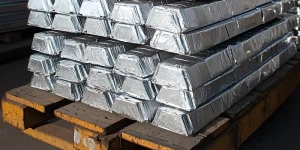
Fast answer: The global LME cash benchmark was US3,227.00–3,227.50 per metric tonne on August 26, 2026, or about US1.46 per pound. This raw-aluminum benchmark is not a delivered U.S. price, scrap-yard payout, mill stock, or finished extrusion/CNC quote.
So, how much is aluminum per pound? Start by naming the transaction. A regional benchmark can include a market premium. A scrap yard pays for a particular category and condition. A mill sells an alloy in a usable form. A custom manufacturer prices the material together with the work needed to make, inspect and deliver the part. Those figures can all be valid at the same time without matching.
Which Aluminum Price per Pound Do You Need?
Match the number to the material state and transaction to avoid a misleading comparison. The six price lanes below answer different buying or selling questions.
| Price category | Current example or pricing path | Use it for | It does not include |
|---|---|---|---|
| LME cash aluminum | LME cash aluminum: US$3,227.00–3,227.50/metric tonne, about US$1.46/lb, valid 2026-08-26 | A global raw-aluminum benchmark | U.S. regional premium, stock conversion, freight or fabrication |
| U.S. Midwest reference | Tower’s published August average: $2.512/lb (page inspected 2026-08-27) | An attributed U.S. regional raw-material reference | A universal delivered price or a custom extrusion quote |
| Guangdong Nanhai reference | Nanhai tax-included reference: CNY 24,430/metric tonne, about CNY 11.08/lb, tax included, 2026-08-27 | A dated southern-China aluminum-profile raw-material pricing basis | Currency conversion, extrusion/finishing fees or Zheng Ji’s quote |
| Local scrap payout | Example: clean aluminum $0.73/lb, cans $0.74/lb, cast wheels $1.11/lb at Orange Recycling, Orange, Texas; each selected item was listed Aug. 7 on the page inspected 2026-08-27 | A named-yard example of category variation | A U.S. national average or another yard’s current payout |
| Mill stock or specialty retail product | Get a current quote for the exact alloy, form, size, quantity and location | Buying sheet, plate, bar, billet, extrusion stock or small high-purity products | A transferable universal aluminum price |
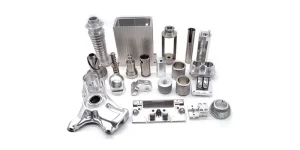
| Custom extrusion or CNC part | Use a project quote based on drawing, quantity, operations, finish and delivery | Budgeting a manufactured, inspected and delivered item | A result from raw metal price × finished weight alone |
These figures should not be averaged. The LME number is a raw-metal reference quoted per metric tonne. Tower’s published figure is an attributed U.S. Midwest reference. The Nanhai figure is a dated, tax-included southern-China basis in CNY. Scrap prices describe what a named yard will pay for accepted material categories. Mill products and custom parts move farther downstream and add their own material, processing and commercial terms.
Use a benchmark to track raw metal and a regional reference to understand the relevant market basis. For scrap, check the yard list; for a defined product, use a supplier quote. If the source does not describe your transaction, its per-pound figure is context rather than your price.
How to Convert an Aluminum Price per Metric Tonne to Price per Pound
A metric tonne is 1,000 kilograms, not the same mass as a U.S. short ton. The NIST exact conversion is 1 avoirdupois pound = 0.45359237 kilogram. That makes one metric tonne exactly 2,204.622621848776 pounds.
Use the source’s original tonne type before selecting a divisor:
| Quoted unit | Calculation | Result |
|---|---|---|
| Currency per metric tonne | Divide by 2,204.622621848776 |
Same currency per pound |
| Currency per kilogram | Divide by 2.204622621848776 |
Same currency per pound |
| Currency per U.S. short ton | Divide by 2,000 |
Same currency per pound |
Do not divide a metric-tonne quote by 2,000. In the current LME example, that mistake would overstate the converted value by about 10.23%.
For the August 26 LME cash bid, the calculation is:
US$3,227.00 ÷ 2,204.622621848776 = US$1.46374257799/lb
Rounded for a practical reference, that is about US$1.46/lb. The offer side converts to about US1.4640/lb. It also rounds to US1.46/lb at two decimal places.
The same calculation works without changing currency. The August 27 Nanhai average converts as:
CNY 24,430 ÷ 2,204.622621848776 = CNY 11.0813/lb
Rounded, it is about CNY 11.08/lb. It remains a CNY-denominated, tax-included regional reference; converting it to U.S. dollars requires a separate dated exchange rate.
To reproduce the calculation, enter the unrounded source value in a spreadsheet or calculator. Divide once, then label the output with its currency and /lb. If the source gives a bid-offer or low-high range, convert both endpoints rather than averaging them first. Keep the longer result for checking and round only the displayed answer. This prevents a small rounding choice from being mistaken for a difference in the underlying market price.
Why Aluminum Price-per-Pound Figures Disagree
Before comparing two prices, check five fields.
- Valid date. Aluminum benchmarks and buy prices move. A precise figure without a date cannot be treated as current.
- Market and geography. LME, the U.S. Midwest, Guangdong and a Texas scrap yard describe different markets. Freight, regional premiums and local demand do not move in lockstep.
- Original unit. Confirm whether the source says metric tonne, kilogram, U.S. short ton or pound. Convert the mass unit first and keep the currency unchanged unless you also have a dated foreign-exchange source.
- Material state. Primary aluminum, billet, sheet, plate, bar, extrusion, clean scrap and a machined part are not interchangeable goods.
- Included transaction layers. Tax, regional premium, alloy/form conversion, processing, packaging and delivery may be included, excluded or quoted separately.
Price drivers matter only when tied to the right layer. Energy and smelting conditions can affect primary-metal economics. Supply disruptions and trade policy can change market availability or regional cost. Freight influences delivered material, while die design, yield, finishing and machining affect a custom part. A driver that explains one layer does not automatically justify a change in every per-pound number. These factors also do not turn a dated snapshot into a forecast.
When two sources disagree, do not start by deciding which is wrong. Normalize their date, geography, mass unit, material state and inclusions. If those fields still differ, the numbers answer different questions and should remain separate.
What Is Scrap Aluminum Worth per Pound?
There is no single national scrap aluminum price per pound. A recycler pays for a category it can identify, handle and resell in its own market. Alloy mix, attachments, coatings, contamination, piece size, volume and local acceptance rules can change the yard’s grade or payout.
Orange Recycling in Orange, Texas is one local example. It listed clean aluminum at $0.73/lb, UBC cans at $0.74/lb and cast wheels at $1.11/lb. The selected items were labeled Aug. 7 on the page inspected August 27, 2026. The page also says its delivered prices are subject to change without notice. These are yard-specific examples, not a national range. They do not promise another recycler will classify the same load in the same way.
Clean material is generally easier to identify and process. Steel fasteners, rubber, coatings, residue or mixed metals can complicate identification and processing. But clean is a buyer’s grade, not merely a visual opinion. A yard may distinguish extrusion, sheet, cans, wire, castings or wheels and may apply its own contamination limits.
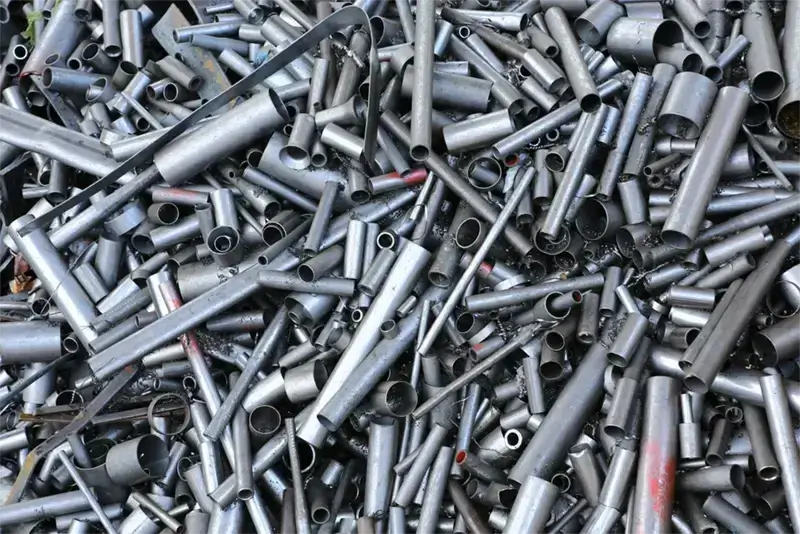
Before loading or separating material, send the receiving yard a description or photos. Ask which category it expects to use. Then check the yard’s current list immediately before delivery. Separating accepted clean aluminum may improve classification. Even so, the expected recovery must justify the handling time; the yard’s current rules still control.
From Raw Aluminum to Mill Stock and Material Cost
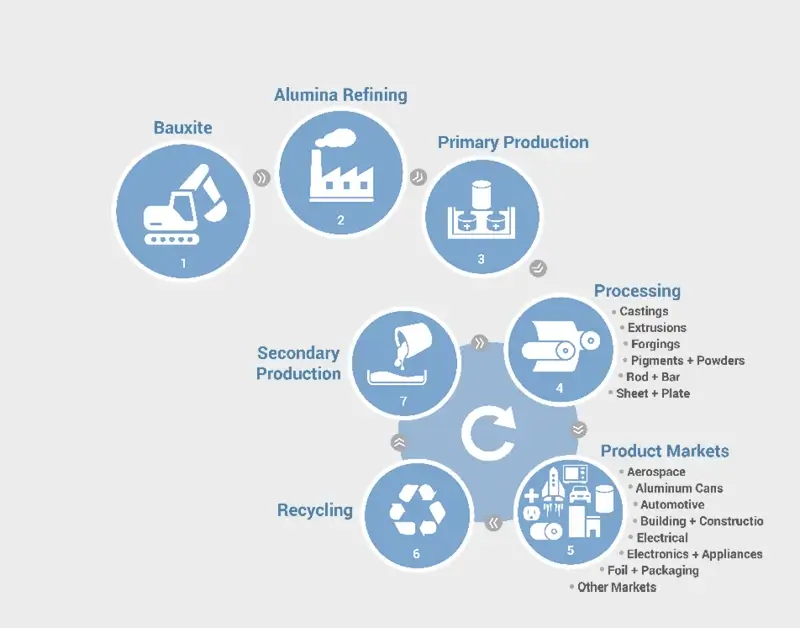
Raw aluminum does not arrive as a finished sheet, plate, bar, billet or profile by itself. A supplier has to provide a defined alloy and product form. It must make or source material in the required dimensions, manage usable yield, handle the order and deliver it to the relevant market. Small quantities, cut sizes, specialty purity and retail service can move the per-pound result farther from a commodity benchmark.
Alloy matters, but this page does not turn that fact into a grade-by-grade price table. For detailed alloy and series comparisons, use our separate guide to price differences between aluminum grades and series. Ask for the exact alloy, temper, form, dimensions, quantity, location and quote date. That lets the price describe what you will actually receive.
A weight calculation is still useful as a material-layer check. At the August 26 LME cash bid conversion, 20 pounds represents about $29.27 of raw benchmark value:
20 lb × US$1.46374257799/lb = US$29.2748515598
At Tower’s published August Midwest reference, the same 20 pounds represents $50.24:
20 lb × $2.512/lb = $50.24
Neither result is a supplier quote. Both exclude product-form conversion, usable-yield loss and the manufacturing, finishing, inspection, packaging and delivery work required by a finished item.
The 20-pound example also assumes that 20 pounds is the weight being priced. In an actual purchase, net finished weight, purchased stock weight and chargeable process weight may differ. An extrusion may start with more billet than remains in its cut parts. Machining can remove material from stock; sheet nesting can leave unusable remnants. Those differences do not make the net-weight calculation useless. They define the calculation’s role. It checks the scale of raw-material cost; the quote must state the charged weight basis and the yield assumptions behind it.
Why a Custom Extrusion or CNC Quote Costs More Than the Benchmark
A custom quote starts with a defined part, not a generic pound of aluminum. Finished weight can help estimate the metal layer. Purchased or chargeable weight may also reflect process yield, cut loss, trial material or other agreed commercial terms. The drawing and production route determine which layers apply.
| Quote component | What it pays for | What changes it | Input to verify |
|---|---|---|---|
| Metal or billet basis | Chargeable aluminum entering the process | Benchmark/region, alloy product form, buy date and usable yield | Alloy, form, weight basis and quote date |
| Die, tooling and setup | Profile-specific tooling, trials and machine setup | Solid/hollow geometry, size, complexity and order volume over which setup is spread | Drawing/profile, annual and first-order quantity |
| Extrusion conversion and yield | Billet heating, press time, handling, stretching, cutting and process scrap | Section size, wall thickness, tolerance, press speed and expected yield | Cross-section, length, tolerance and acceptable yield assumptions |
| Finishing | Anodizing, powder coating, polishing or other required finish | Finish system, color, surface area, masking and quality requirement | Finish specification, color and cosmetic acceptance criteria |
| CNC, fabrication and inspection | Cutting, drilling, milling, welding, assembly and verification | Geometry, number of operations, tolerance, fixturing and inspection plan | Drawing, tolerances, secondary operations and inspection records needed |
| Packaging, freight and import costs | Protection and delivery to the required destination | Part length/fragility, packaging method, shipment size, route, Incoterm and applicable duties/taxes | Destination, packaging requirement and commercial terms |
Not every project uses every component, and the raw benchmark is only the first row. A simple cut length and a close-tolerance finished assembly may have similar net aluminum weight. Their tooling, cycle, yield, inspection and packaging requirements can be very different. Quantity changes how one-time setup is distributed, yet it does not erase the work.
When comparing two quotations, separate one-time items such as a new die or setup from recurring unit costs. Then align the included operations, inspection level, packaging, destination and commercial terms. A lower per-pound figure can be incomplete if it excludes work priced elsewhere as a separate charge. It can also be incomplete if some work has not yet been priced. The comparison is reliable only when the scope and weight basis match.
For a quote that can be compared meaningfully, provide:
- A drawing or profile cross-section, revision and required dimensions
- Alloy and temper, or the performance requirement if the material is still open
- Finished length, first-order quantity and expected annual quantity
- Tolerances, secondary machining or fabrication, and inspection records needed
- Finish system, color and cosmetic acceptance criteria
- Packaging, destination and required commercial terms
For a custom profile, we can review these inputs through our aluminum extrusion service. If the part requires milled, drilled or otherwise machined features, our aluminum CNC machining service can review those operations as part of the project route. Send us the drawing and the inputs above; we will identify what needs confirmation before preparing a project-specific quotation.
How to Check the Latest Aluminum Price per Pound
Use the same five checks whenever you refresh a price:
- Open the original source. Prefer the exchange, named supplier, regional price publisher or receiving scrap yard responsible for the figure.
- Record the valid date. Keep the price’s own date separate from the day you inspected the page.
- Preserve the original unit and currency. Confirm metric tonne versus short ton before converting to pounds.
- Name the material and transaction. State raw benchmark, regional reference, scrap category, mill product or finished custom part.
- List what is included. Check tax, premium, processing, yield, packaging, freight and any other commercial layer that affects the number.
If you cannot refresh a current source, keep its last verified date. Remove wording such as today or current. Use the price source for the transaction you are actually making, not the most convenient number on the page.