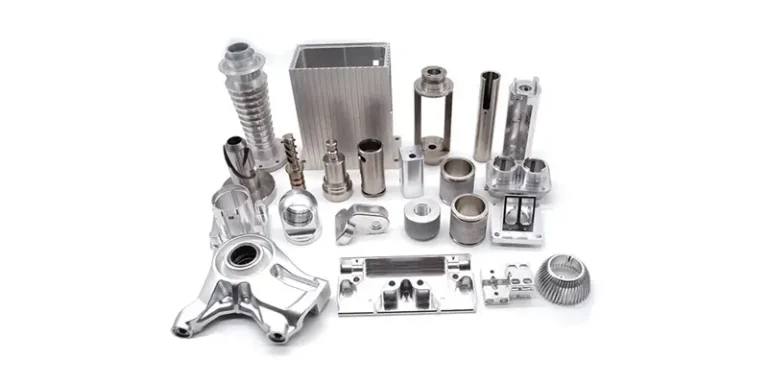
An aluminum grade usually refers to an alloy designation, not a general quality level. A 6061 label identifies an alloy, but it does not define final material properties. Two products can share that number yet differ in temper, form, dimensions, or governing data.
There is no universal best aluminum grade. The real question is whether a material fits the specific part and process. Start with the form and manufacturing route, then consider load, environment, fabrication, finish, and specification requirements. That sequence turns a long alloy list into a practical shortlist and shows what still needs verification.
How to read an aluminum grade
First, determine whether the material uses a wrought or cast designation. Wrought products include rolled sheet and plate, extrusions, tube, bar, rod, and many forged products. In the common U.S. system, wrought aluminum alloys use four digits. The first digit identifies the broad alloy family. For 2xxx through 8xxx, the second digit records a modification and the final two identify the alloy. The 1xxx family uses a separate purity-based convention.
Cast designations look different. They use three digits followed by a decimal point, such as A356.0. That decimal point is a useful warning: do not interpret a cast designation as a four-digit wrought alloy. The Aluminum Association’s standards and registration system is the governing U.S. reference for these designation records. ESAB’s designation overview also provides a practical explanation of wrought, cast, and temper notation.
The series and exact alloy answer different questions. The 6xxx series indicates a family based on magnesium and silicon. The complete number 6061 identifies one alloy within that family. Family tendencies help with orientation, but they cannot replace alloy-specific data.
Temper is a separate part of the label. In 6061-T6, 6061 names the alloy and T6 identifies a heat-treatment condition. Other condition families include F, O, H, W, and T. The same alloy can behave differently in different tempers, so dropping the suffix can remove a decisive part of the specification.
Product Form Matters in Material Selection. A value published for sheet or coil does not automatically apply to an extrusion. If the designation system, temper, or form is missing, stop before inferring performance. Check the drawing, stock marking, material certificate, or governing specification.
This explanation is U.S. and Aluminum Association oriented. Other designation systems use different notation. A similar-looking name does not establish equivalence across systems, so the governing drawing or specification must control any substitution.

Wrought aluminum series at a glance
A wrought series identifies a broad chemistry family, not a complete material specification. Use the map for orientation. The exact alloy, temper, product form, and governing data still control the final comparison.
| Series | Main chemistry direction | Strengthening or condition direction | Representative examples and why they appear |
|---|---|---|---|
1xxx |
At least 99% aluminum | Non-heat-treatable; condition still matters | 1100 and 1350 offer workability and conductivity context. |
2xxx |
Copper is the principal addition | Heat-treatable | 2024 is a familiar high-strength aircraft alloy example, not a universal choice. |
3xxx |
Manganese is the major addition | Non-heat-treatable | 3003 is a general-purpose example; 3004 appears in can bodies. |
4xxx |
Silicon is the principal direction | Includes heat-treatable and non-heat-treatable alloys | 4043 is a common filler-alloy example. The exact alloy and product role control selection. |
5xxx |
Magnesium is the primary addition | Non-heat-treatable; cold work can raise strength | 5052, 5083, 5005, and 5182 are familiar examples. Form and temper control comparison. |
6xxx |
Magnesium and silicon form magnesium silicide | Heat-treatable | 6061, 6063, 6082, and 6005A often enter extrusion decisions. Use product-specific data. |
7xxx |
Zinc is primary, often with magnesium and sometimes copper or chromium | Heat-treatable, with a very-high-strength family direction | 7050 and 7075 are familiar examples. Exact form, temper, and specification are required. |
8xxx |
Other registered compositions; particular alloys may involve iron, tin, or lithium | No single family-wide treatment statement applies | These are specialized registered alloys. Check the current record or specification. |
The 4xxx and 8xxx rows need special care. Not every 4xxx alloy follows one treatment path. The wrought 8xxx family also has no single principal-element formula. It is different from cast 8xx.x, which belongs to the cast designation system.
The treatment column shows strengthening direction. Heat-treatable families can develop selected conditions through controlled thermal processing. Non-heat-treatable families rely on other condition routes, including cold work where applicable. These labels do not rank every alloy by strength. They tell you which condition questions to ask next.
Representative aluminum grades: where comparison can start
A shortlist only works when each candidate keeps its product context. The rows below are not a ranking. They show why a grade might enter the discussion and what must be verified next.
| Grade | Evidence and product context | What can put it on the shortlist | What must be checked next |
|---|---|---|---|
5052 |
Rolled-product source; 5xxx family | Formability in softer condition and cold-worked temper options make it a useful rolled-product candidate. | Required form, temper, bend or forming route, joining, exposure, and governing data. |
6061 |
Extruded-profile source; 6xxx family | Welding, machining, and structural or industrial use can bring it into an extrusion shortlist. | Temper, profile geometry, joint or post-weld requirements, finish, and applicable data. |
6063 |
Extruded-profile source; 6xxx family | Appearance, surface consistency, extrudability, and anodizing can matter for visible profiles. | Load role, temper, profile geometry, and the finish route or trial. |
6082 |
Extruded-profile source; 6xxx family | Higher-load structural extrusion needs can move it onto the shortlist. | Temper, geometry, welding or machining priority, and anodized appearance expectations. |
6005A |
Extruded-profile source; 6xxx family | Structural role, extrudability, complex geometry, and decorative anodizing may need a balance. | Temper, geometry, finish target, and local or specification availability. |
2024 |
High-level official family and example evidence only | A familiar 2xxx high-strength example for orientation. | Exact temper, form, environment, joining route, and governing data before selection. |
7075 |
High-level official family and example evidence only | A familiar 7xxx very-high-strength example for orientation. | Exact temper, form, environment, joining route, and governing data before selection. |
Keep each source within its product scope. The United Aluminum 5052 page supports the rolled-product condition principle. Hydro’s pages support only the stated extrusion context for 6061, 6063, 6082, and 6005A. Neither source supports a universal cross-form ranking.
For a rolled part with significant forming, 5052 can be a sensible starting candidate. The next decision is not simply whether to use 5052. It is which available temper fits the forming route and final requirement.
For an extrusion, 6061, 6063, 6082, and 6005A can enter the discussion for different reasons. Geometry, load, joining, secondary machining, and visible finish decide which reasons matter. The producer context keeps that comparison useful without transferring it to sheet or plate.
Apply the same restraint to high-strength labels. The names 2024 and 7075 can orient an early search, but neither is a complete recommendation. Exact temper, form, environment, joining route, and governing data must support the next step.
A common comparison such as 5052 versus 6061 can help once the intended forms and processes are clear. It should not replace that first step.
Before comparing property values: confirm the exact alloy, temper, product form, thickness or dimension scope, governing source or specification, units, and test basis. If those fields do not align, do not compare the numbers. Find a same-scope source or obtain project-specific confirmation. Separate explanations of aluminum hardness, aluminum tensile strength, and aluminum yield strength can help interpret those properties after the material scope matches.
How to choose an aluminum grade for your part
Use the following order for a first-pass decision. Each step removes unsuitable options or changes what must be verified.
Keep the decision tied to a real drawing or product requirement. A family reputation or popular grade name can suggest candidates, but it cannot complete any step below.
- Start with product form and the manufacturing route. A rolled sheet, an extruded profile, a machined plate, and a casting begin from different supply and process paths. Confirm the needed form before comparing properties or availability.
Sheet, plate, coil, bar, tube, and extrusion are not interchangeable starting points. Their geometry, manufacturing route, and applicable data differ.
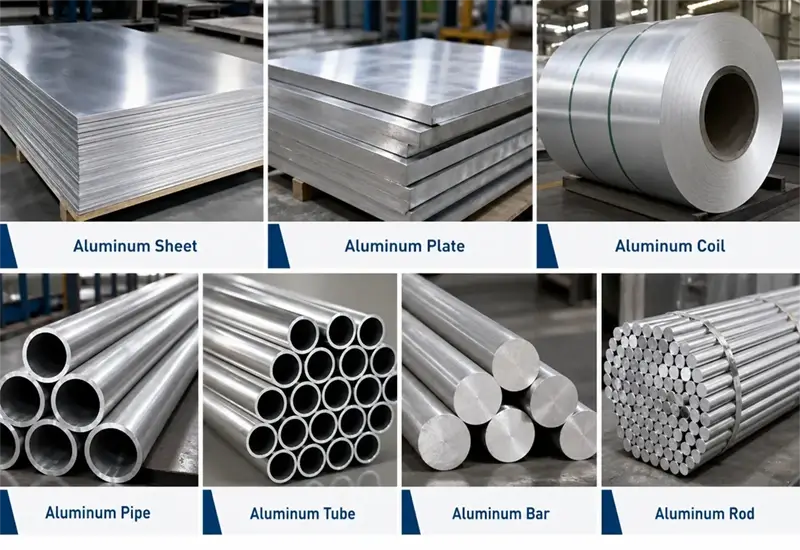
A candidate can disappear at this stage if the required form is unavailable or poorly matched to the geometry. In that case, change the alloy, form, or process route before refining the shortlist.
- Define the load and strength role. Identify whether the part carries a primary structural load, supports a housing, serves as trim, or performs another role. Higher strength priority can bring 2xxx, 7xxx, or some 6xxx choices into consideration. It does not make any family automatically suitable.
Write down the required loading role and the data needed to confirm it. This prevents a family-level strength description from becoming an unsupported part-level approval. - Screen the service environment. Exposure to moisture, chemicals, salt, temperature changes, or dissimilar metals can alter the corrosion and finish strategy. Avoid using a loose label such as marine grade as the final decision. State the actual exposure and verify the alloy, joint, surface treatment, and maintenance assumptions together.
If the environment rules out the preferred candidate, change the material or protection route. Do not keep the grade and hide the conflict behind a generic finish label. - Map forming, joining, and machining operations. A grade that suits the service load can still create difficulty in bending, welding, cutting, or machining. Temper also changes the result. For a rolled and formed 5052 part, a softer condition can support more demanding forming, while a cold-worked temper changes the strength and ductility balance. Select the condition with the bend route and final requirements in view, not from the alloy number alone.
- Set the finish and appearance target. Decorative anodizing, painted surfaces, and ordinary functional finishes do not create the same priorities. For a visible extruded profile, surface consistency and extrudability can move 6063 or 6005A into consideration. A more structural role can move 6082 onto the list, while welding or machining priorities can support consideration of 6061.
Profile geometry and visible finish can reorder a 6xxx shortlist even when the family remains the same.
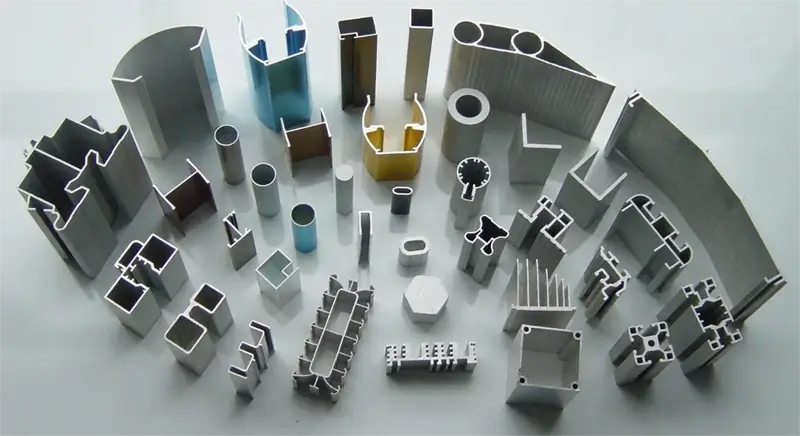
These directions apply to the cited extrusion context, not every product form. Confirm the profile geometry, temper, joint plan, machining, and finish route. Use a finish trial when visible appearance carries material risk. If one candidate cannot meet both load and appearance needs, revise the profile, process, alloy, or finish plan before release.
Check governing requirements, availability, and evidence. A common alloy is not automatically acceptable under a drawing, customer specification, or regulated requirement. Confirm the required designation system, specification edition, product record, documentation, and substitution rules. Availability matters, but it cannot override the governing requirement without written approval.
If the specified condition or form is unavailable, return to the drawing owner with a defined alternative. State exactly what changes and request approval against the governing requirement.
The result is a defensible shortlist, not a universal winner. It also shows which evidence is still missing.
How to specify aluminum before ordering or RFQ
Avoid writing only aluminum or a four-digit alloy on a drawing or RFQ. A usable handoff should make the material condition, form, and verification basis clear.
A practical material callout uses this pattern: alloy + temper or condition + product form + dimensions + governing specification. Add process, finish, documentation, and testing requirements where the drawing or contract needs them. The pattern is a handoff structure, not a substitute for the applicable specification.
Material documentation should let purchasing, engineering, production, and inspection confirm the same alloy, temper, and product form.
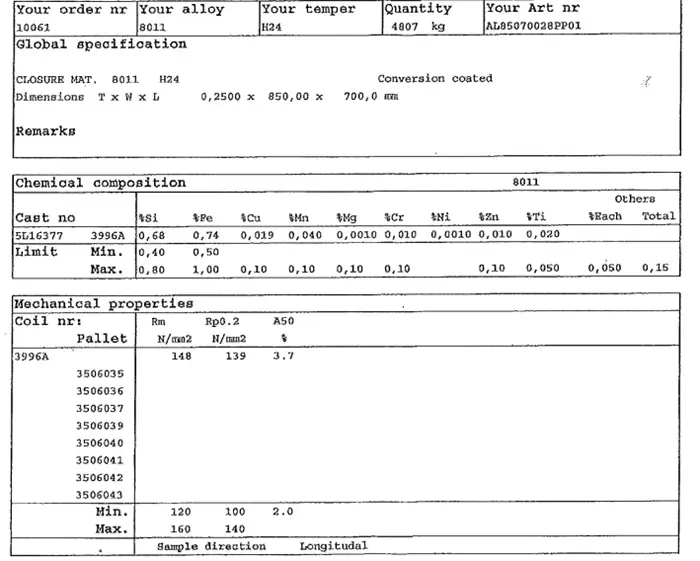
Include these fields when they affect the project:
- exact alloy designation;
- temper or condition;
- product form and relevant dimensions;
- governing specification, source, and required edition;
- required manufacturing and finish state;
- certification, documentation, or testing requirements; and
- drawing and application constraints needed for review.
The exact set varies by contract and industry. If someone proposes an equivalent alloy or standard, require written confirmation against the governing drawing or specification. A similar name or broad family does not establish equivalence.
Can you identify an unknown aluminum grade by sight?
No. Appearance alone is not definitive enough to identify an exact aluminum alloy. Start with stock markings, drawings, purchase records, and material certification. If exact identity still matters, use an appropriate hardness check, alloy analysis, or laboratory method for the required level of certainty.
When traceability and suitable testing are unavailable, record the exact grade as unknown. Do not assign 5052, 6061, or another designation from color, surface texture, or shape alone.
For custom work, we can review material questions involving custom aluminum extrusion, aluminum CNC machining, supplementary fabrication, and finishing. Send us the drawing or profile and required product form. Include the candidate alloy and temper if known, load and environment, secondary operations, finish, and quantity. We will use those inputs to identify what needs confirmation before quotation or production review.